
By Corinne Schmidt
MOORHEAD — What began as a small post-pandemic effort to support students who were struggling to afford groceries has now become a steady, high-impact resource on Concordia College’s campus. The Cobber Food Pantry, founded in 2021, continues to grow in visibility, partnerships and student usage as food insecurity remains a significant concern among college students nationwide.
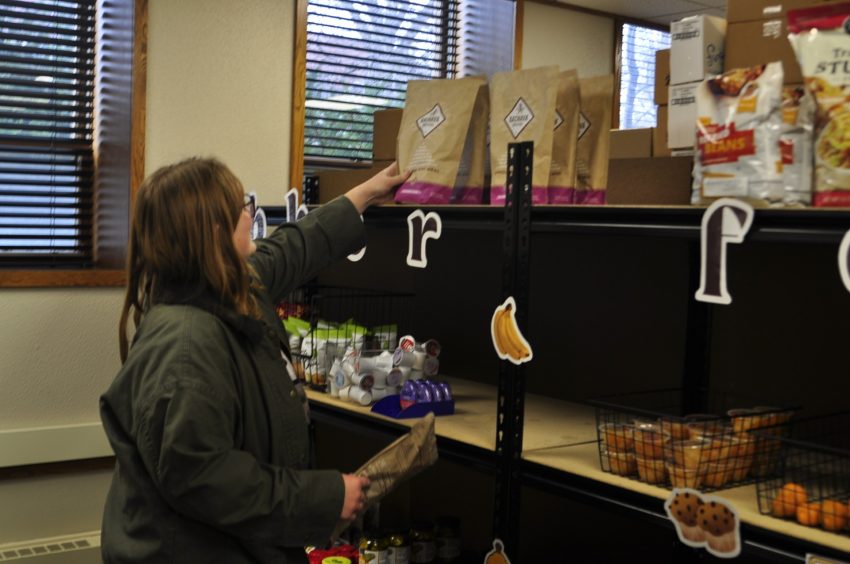
The pantry operates twice a week in the basement, affectionately dubbed “the garden level” of Old Main — Mondays from 11 a.m. to 1 p.m. and Thursdays from 5 p.m. to 7 p.m. — and sees a consistent stream of visitors each day it opens.
Last year alone, the pantry recorded more than 1,700 visits, representing 175 individual students.
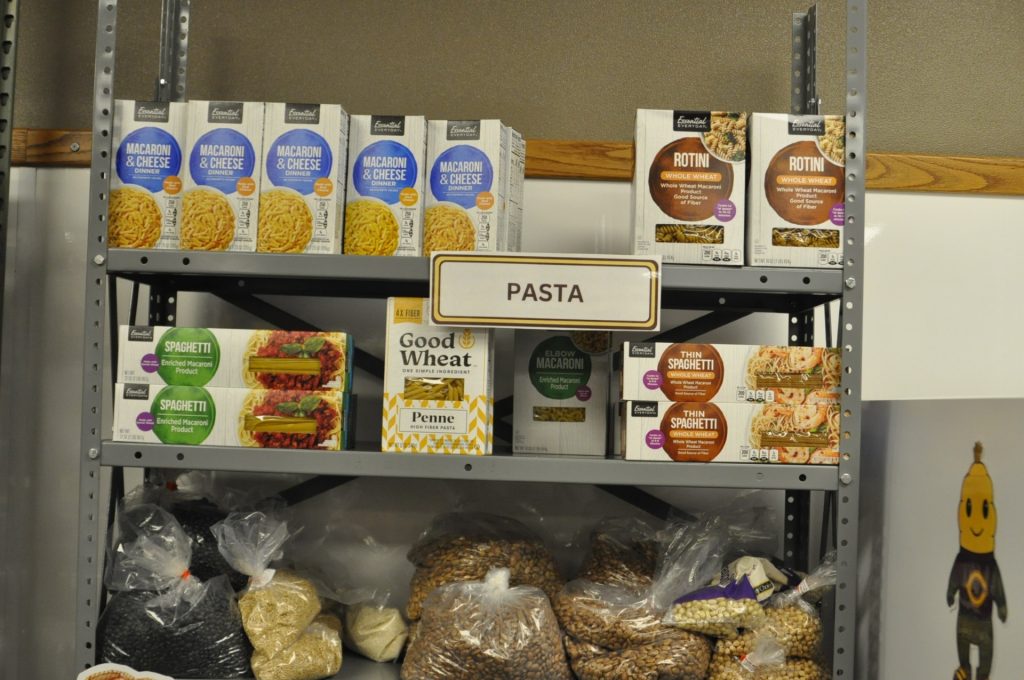
Health Promotion Coordinator, Michelle Draxten, said the pantry has distributed “Over 14,000 pounds of food last year…and even now over the past few months we’ve had anywhere from 140 to 200 visits per month.”
The goal, Michelle said, is straightforward: “The pantry exists to provide access to foods for students who are facing food insecurity and by doing that it really helps them focus on their education…[and] overall being able to support the experience of being a Concordia student.”
Inside the pantry, students will find nonperishable staples, snacks and hygiene products. Students are free to take what they need — there is no limit on how much total food they can pick up. Only the top two meal-plan tiers are restricted from using the pantry, though Michelle emphasized exceptions are made when necessary.
“We will absolutely work with students,” she said.
Student worker, Natalie Mahlum, joined the pantry staff after seeing friends run out of dining dollars and meal swipes before the semester ended.
“It’s a great source to have on campus to allow students to get their basic needs and get the education that they deserve,” she said.
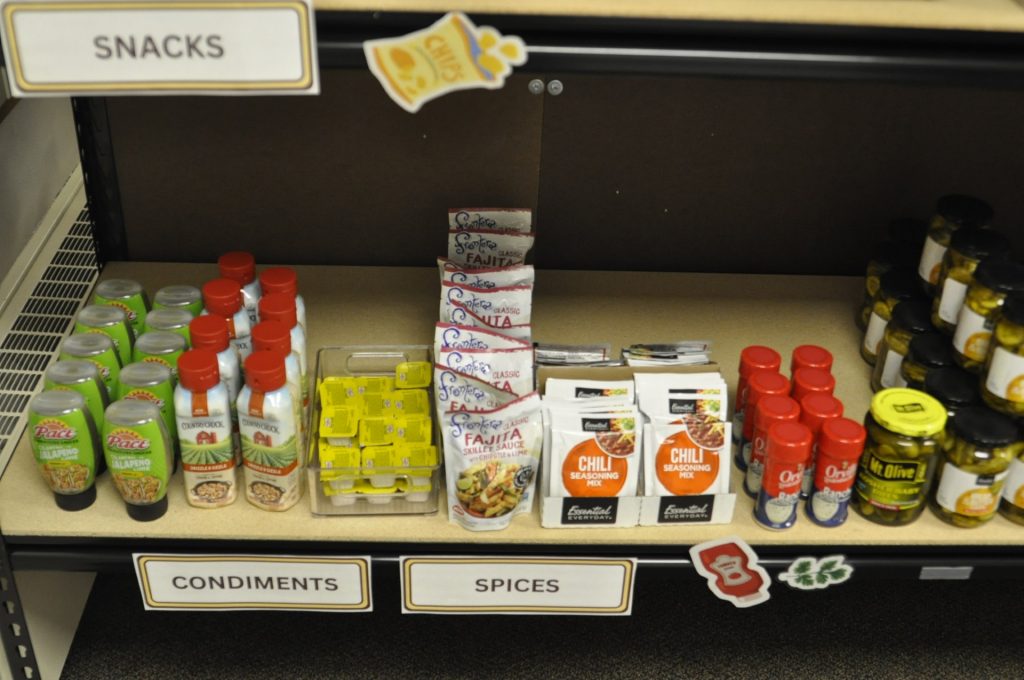
Natalie said working at the pantry has also taught her about food waste — both how much is created and how much can be redirected to students who need it. Still, getting the right kinds of food remains one of the pantry’s challenges. Through partnerships with Hornbacher’s and the Great Plains Food Bank, the pantry receives regular donations. Sometimes, though, those donations don’t match what students will actually use. When that happens, the pantry passes items to First Church United so nothing goes to waste.
The pantry also has to manage space and traffic flow. To keep things moving smoothly, only five students are allowed inside at a time. Each visit is designed to be as simple and welcoming as possible.
“We are always happy to see people there, and people should check us out and bring their friends,” Natalie said.
Beyond serving students’ immediate needs, staff members hope the pantry continues to influence broader conversations about basic needs on college campuses.
“I really hope we can set a good example to other campuses and the broader community in how we support students,” Michelle said.
The team conducts annual surveys to better understand students’ experiences and adjust services accordingly, “We try to do the best that we can but also with the understanding that we can’t always meet everyone’s specific needs,” Michelle said.
As college costs rise and wages stay flat, the Cobber Food Pantry has become a vital resource. One that students and staff can support simply by spreading the word. For many students, knowing the pantry is available can mean the difference between worrying about their next meal and being able to focus fully on academic and campus life.
