
By George French and Liz Komagum
Dining Services has made some improvements in time for the beginning of this school year. From 100 new food items to new pop fountains, there have been additions for students to enjoy.
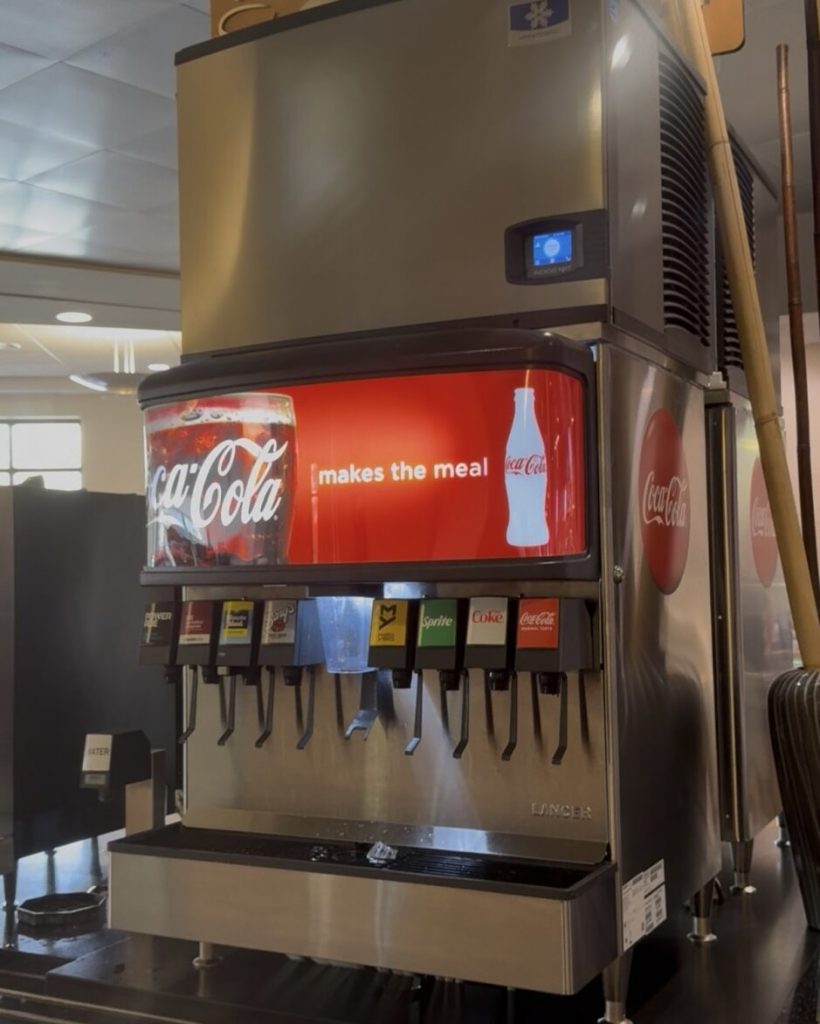
One of the biggest additions to Anderson Commons was the replacement of the pop fountains. Patrick Dew, the supervisor of Concordia Dining Services, gave the reason for this change by saying, “The older ones were fine, they were just getting old. You know, parts were getting hard to find so we thought we needed to get new ones.”
The 100 new food items were selected from 300 recipes, with Dining Services hosting three taste tests over the summer to decide what students would enjoy most. Dew said, “The kids got to vote on what they liked, and a lot of the top ones made it. We’ve seen some of them already, but there are plenty more to go.”
Notice of these taste tests were sent through a campus-wide e-mail. “The cobweb e-mail got sent out and there was also word of mouth. A lot of people heard about it, but it was spear-headed mainly by e-mail,” Dew shared.
The voting system for these taste tests was putting chips in the labelled cups on top of the food items based on whether someone liked or disliked it. Jay Rust, a student at Concordia, went to one of these taste tests after seeing the e-mail and being lured in by a free lunch.
“I think it was fun. The only thing is that it would sometimes get really crowded in an area because the chips were on top of the food. So, there’d be people waiting in line for the food as well as people trying to get their chips in the cups. Sometimes it was a bit frustrating to be standing there waiting to put a chip in for 5 minutes,” Rust shared.
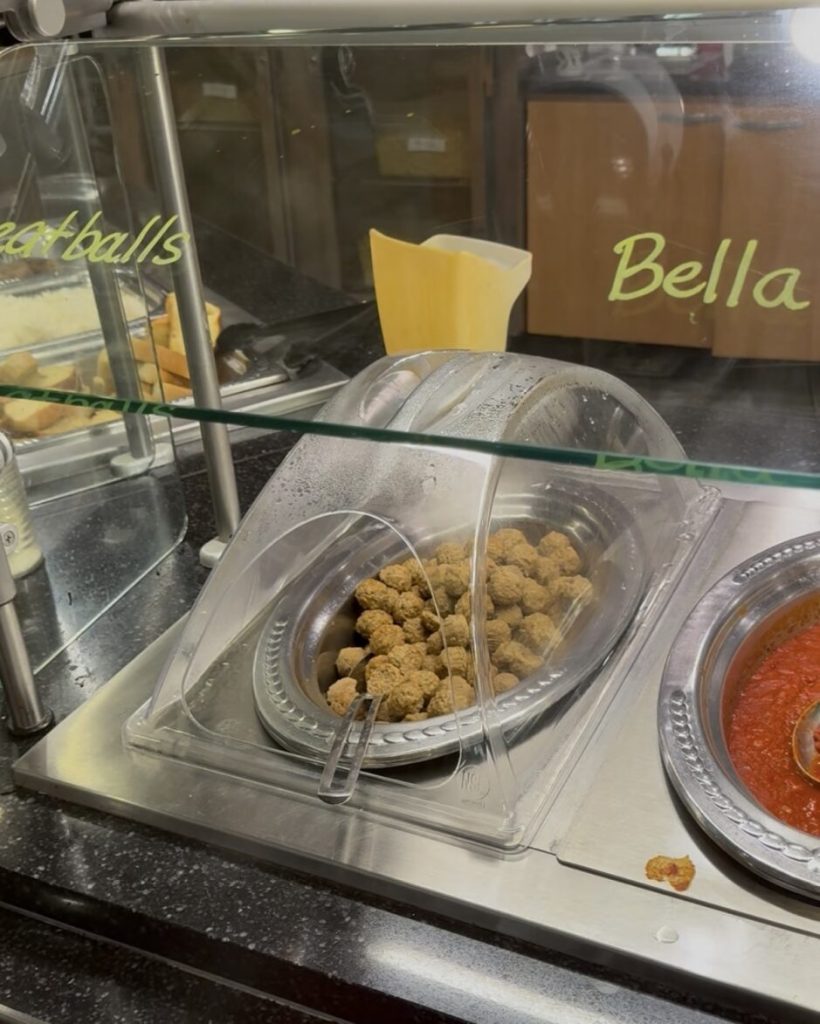
There has been a change in how food is labelled. Instead of just using the TV to display the names of the food, Anderson Commons has taken to writing the names on the glass covering the food. The TV is now used to display a QR code that takes you to the online menu and a breakdown of the food items.
To improve the quality of food throughout the day, there was an addition of plastic hoods to keep food warmer for longer. Dew shared, “a lot of little things like that we implement to make the dining experience better.”
Behind the scenes, Dining Services has been putting more effort into making the food enjoyable and accessible to more people. Through working with a dietician, Hannah Blumhardt, Dining Services tried finding new recipes that people with special diets and food intolerances could eat. There are even plans to make dairy-free ice cream.
“Special diets have become more important each year. We scoured our recipes, and we looked into what we could do to make more foods available to special diets. We’re trying to make things a little more accessible to everyone,” Dew said.
However, some of these changes have not affected those groups. Rust has mentioned there hasn’t been much of a change to their dining experience with their dietary restrictions.
“For me especially, it’s been maybe once a day or once every other day there is a main course I can actually eat, which is pretty much the same as last year. Although, I do appreciate the vegan and gluten free pizza options,” Rust said.
Annabelle Lewis, a sophomore at Concordia, has noticed a lack of information on ingredients. She shared that she recently found out she had an egg allergy and now has to pay more attention to what she eats, but she has no way of knowing if a food item has egg.
“I feel that I would benefit better from an ingredients list, but there is none. I think having that transparency is important,” Lewis said.
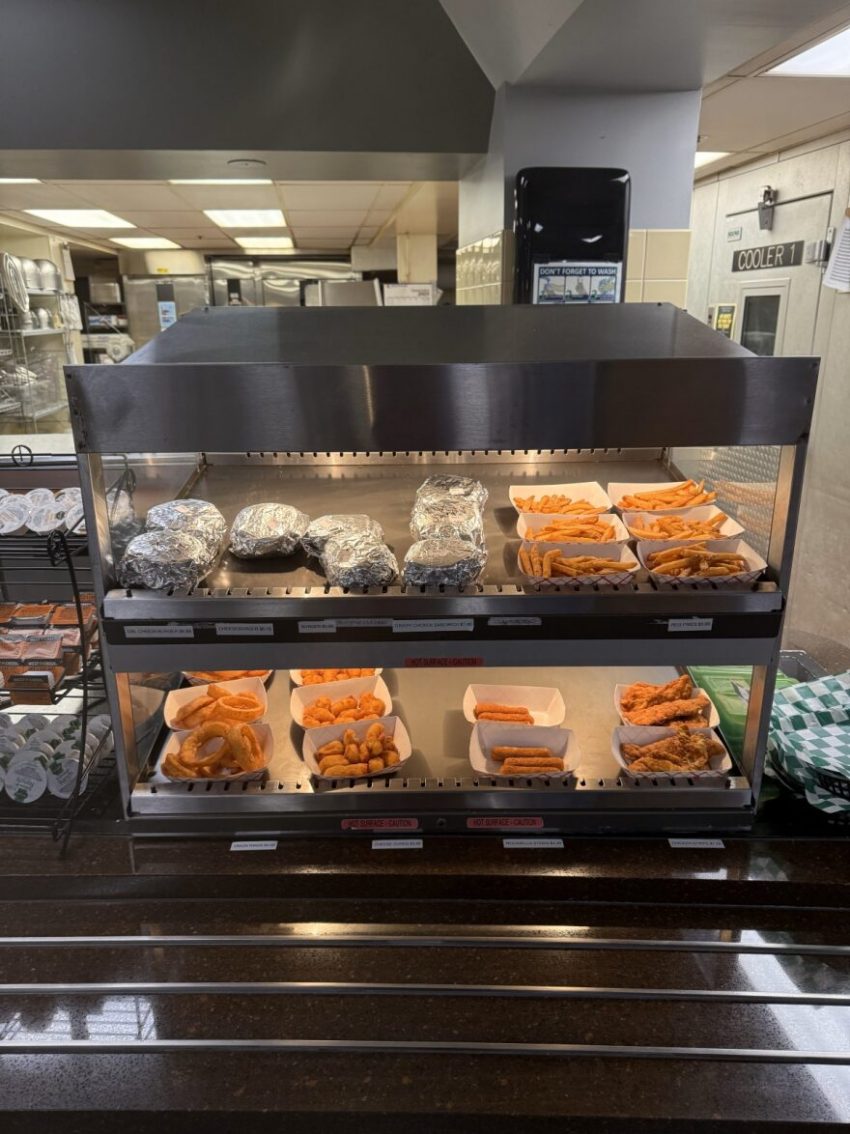
The Maize has also undergone changes starting last spring to better improve the overall efficiency of ordering food. Huy Vo is a 4th year Student Manager of Dinning Services who mainly works in the Maize. He says the implementation of a new food warmer has been the biggest change in the past year.
One reason for getting a new food warmer was a need for better portioning, especially for french fries and chicken tenders.
Vo stated, “Student Workers [of the Maize] end up giving customers way too much out for portions, let’s say, a regular fry is like three ounces? Some [Student Workers] will give like four or five ounces. Or they just don’t care and throw in as many fries as they can.”
The cost efficiency of the new system extends to a more efficient waiting time for students to get their food. With the new system, students can grab food and check out quickly compared to having to wait in line.
One downside to the new system is less freshly made food. The old system made it where most food had to be made fresh for each customer. According to Vo, because the food is pre-cooked, food can sometimes be left out for two or three hours. This is especially true for food items like onion rings and cheese curds as those used to always be made fresh, while French fries and chicken strips have always been precooked and ready to serve.
Vo said, “The food’s a little bit less fresh than the traditional way, but you get your food way faster and I think this is going to be the new way to do it for the foreseeable future.”
There have been some mixed reviews on this change, most leaning towards the negative side. Alejandro Sanchez Gadea, a sophomore, reflected on the new system.
“To be honest, I don’t like it. It’s cold, it’s not fresh, and I really liked the human interaction from before. The lines used to be there, but they weren’t long enough for me to feel rushed about it,” Sanchez Gadea said.

