
By Madi Wimmer
At Concordia College, Día de los Muertos, also known as Day of the Dead, is more than a cultural event; it’s a bridge between community, memory, and identity. Celebrated on campus from Oct. 27 through Oct. 31, the annual event honors loved ones who have died and invites students of all backgrounds to learn about and experience its meaning.
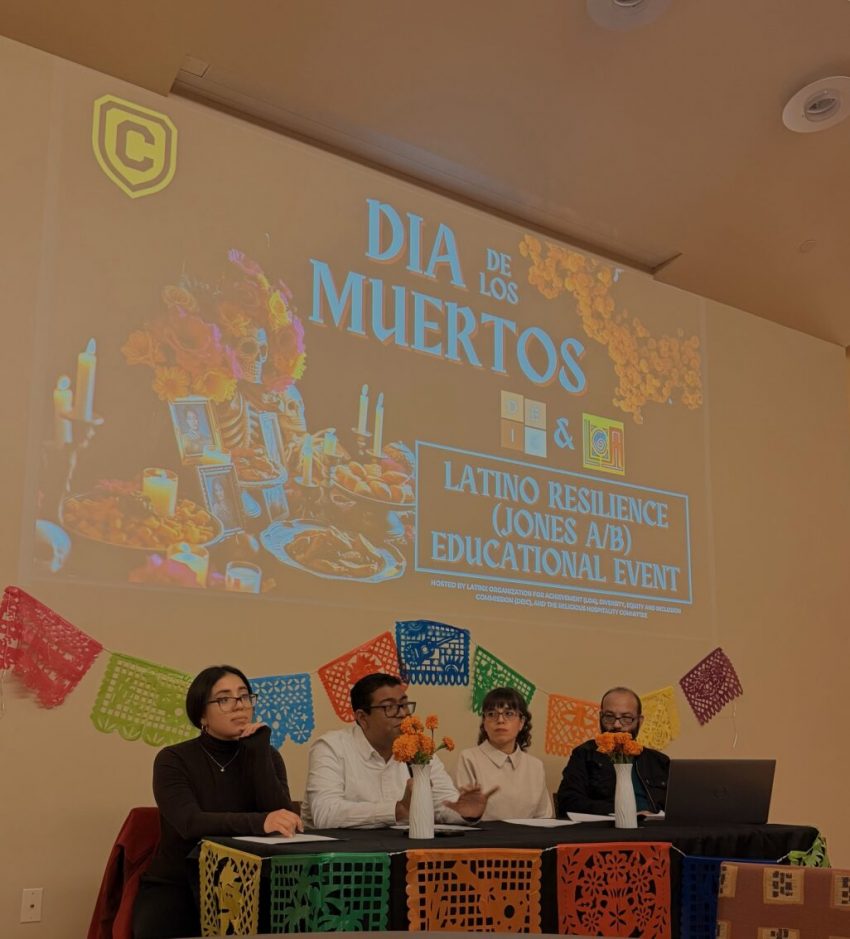
One of the main events was an educational panel held Thursday evening in Jones A/B, which explored the history and deeper meaning behind Día de los Muertos. Speakers included César Méndez from the Spanish department, Roberto Palomeque from the music department, and student representative Selani Gonzalez Vazquez from the Latinx Organization for Achievement (LOA). Together, they discussed the importance of Día de los Muertos and its continuing relevance.
Día de los Muertos is a Mexican holiday that honors and remembers loved ones who have died. It’s not about mourning, but about celebration, remembrance, and the connection between the living and the dead.
Méndez said, “Día de los Muertos is about keeping memory alive. It’s not about sadness, but about connection. We don’t think of our loved ones as gone; we think of them as visiting.”
This year’s celebration, hosted by the Diversity, Equity, and Inclusion Commission (DEIC), the Latinx Organization for Achievement, and the Religious Hospitality Committee, featured educational panels, live mariachi performances, traditional food, and several ofrendas placed around campus.
Ofrendas symbolize familial connections, serving as welcoming tributes to the deceased. They commonly feature photos of loved ones who have died, candles representing fire to guide souls back to the world of the living, and pitchers of water so spirits can quench their thirst after their long journey.
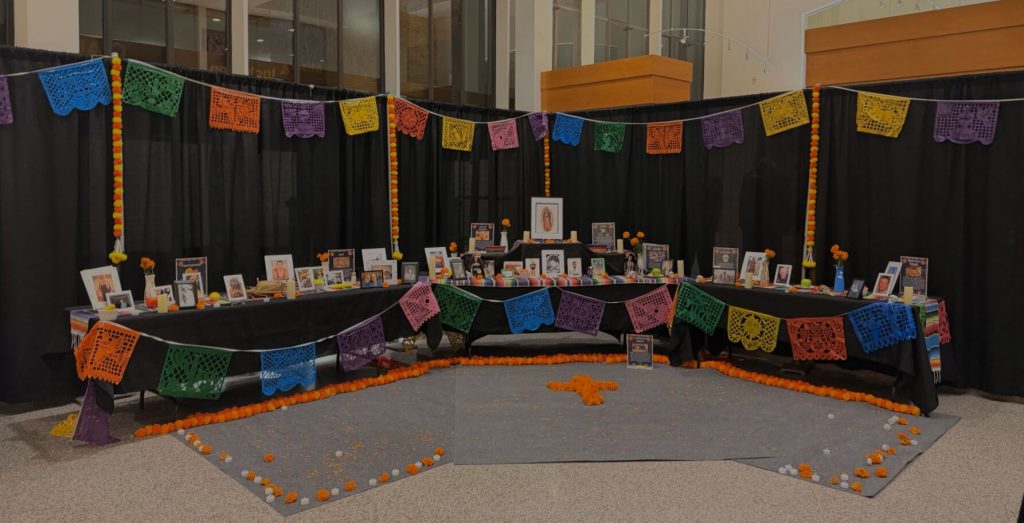
Food and drink are also offered, along with calaveras, or sugar skulls, which represent death and rebirth and remind people that death is a continuation of life.
Pan de muerto, a sweet bread often decorated with bone-shaped pieces, is another staple of the celebration. Most notably, bright orange marigolds, or cempasúchil, are placed on the ofrendas, their vivid color and strong scent said to help guide spirits to the altar.
“The ofrenda is kind of like the base of Día de los Muertos. If you don’t have one, it almost doesn’t feel like the holiday,” said Aitor Burillo Arellano, belonging commissioner for DEIC and chair of this year’s celebration.
During the panel, speakers highlighted the traditions of Día de los Muertos and how important they are to their culture. Palomeque described the traditions of cleaning graves, preparing traditional foods, and incorporating music into the celebrations.
“The music of Día de los Muertos isn’t meant to be sad,” Palomeque said. “It’s joyful, because it celebrates that connection that never truly ends.”
He also spoke about the resilience reflected in the holiday’s traditions. “There’s a deep strength in how people continue to honor their ancestors despite loss or change,” Palomeque said. “It shows how culture endures even when people are far from home.”
Méndez expanded on how the holiday blends Indigenous and Catholic traditions, creating a unique celebration of life and memory.
“It’s one of the few times you see pre-Hispanic and Christian beliefs come together so naturally,” he said. “It shows how culture can adapt and remain faithful to its origins.”
Gonzalez Vazquez added that sharing the event on campus helps build understanding across cultures. “It’s not just for Latino students; it’s something we can all learn from. A celebration that connects everyone through love and memory.”
Día de los Muertos is very different from mourning. “The holiday is about celebrating the beauty of life and remembering those who have passed,” Palomeque said. The tradition is rooted in the belief that death is a natural part of the human cycle and that the dead remain members of the community, temporarily returning to Earth to visit their loved ones.
Events like the educational panel on Día de los Muertos at Concordia provide students with an opportunity to engage directly with the history, symbolism, and personal meaning behind them. By learning from faculty and students, attendees gain new perspectives and knowledge that could last a lifetime. Concordia’s sharing of these traditions provides a space for connection, reflection, and remembrance within the campus community.
Burillo Arellano said, “Seeing the community come together to honor loved ones and share in these traditions is what makes this celebration so meaningful.”
